
by Kora Klapp

I didn’t believe my eyes. On the CDC’s website [1] I read:
“The claim ‘vaccines do not cause autism’ is not an evidence-based claim because studies have not ruled out the possibility that infant vaccines cause autism.”
Then this is laid out:
“The rise in autism prevalence since the 1980s correlates with the rise in the number of vaccines given to infants. Though the cause of autism is likely to be multi-factorial, the scientific foundation to rule out one potential contributor entirely has not been established. “
For a long time, the language around the development of ASD has been unclear and misleading. For a direct causal relationship, all other correlated factors would have to be ruled out. All vaccinated individuals would develop autism to some extent, which is clearly not the case. On this basis, the claim “Vaccines don’t cause autism” does still hold. They are not a general root cause. But what do we expect? Autism is currently agreed on to have a multicausal onset. There are preconditions, genetic and epigenetic factors, sensitive moments and triggers, and there are factors that can exacerbate the condition and bring out its most debilitating and pathological variants. [2]
What is Autism?
It hasn’t even been clearly defined what autism is. There are high-functioning individuals with genius-level skills on the spectrum, as well as those who are not able to live their own lives. What can be seen in all individuals on the autistic spectrum is a certain set of behaviours: a preference for focusing on details, schematizing and repetition and a tendency to withdraw, coupled with impaired reading of social cues and, hence, reduced social skills.
This mirrors imbalances in the working of the brain and nervous system, mostly a left-hemispheric dominance, a deficit in the right hemisphere and reduced connectivity of both hemispheres in the corpus callosum. [3] [4]
Many more boys than girls are diagnosed with autism, approximately at a 4:1 ratio. Their imbalanced brain has been called “extreme male brain” for having the features aligned with left hemisphere dominance or right hemisphere deficit. [5]
Epidemic or Over-Diagnosis?
It has been claimed in many articles that ASD should rather be termed a neurodiversity than a disorder, which is in line with a policy of non-discrimination and inclusiveness.
The modern-day value of technical, scientific thinking, focusing on measures and small details, and the lifestyle of little motion, but co-regulation with a device rather than with other people, fosters left-dominant brains. 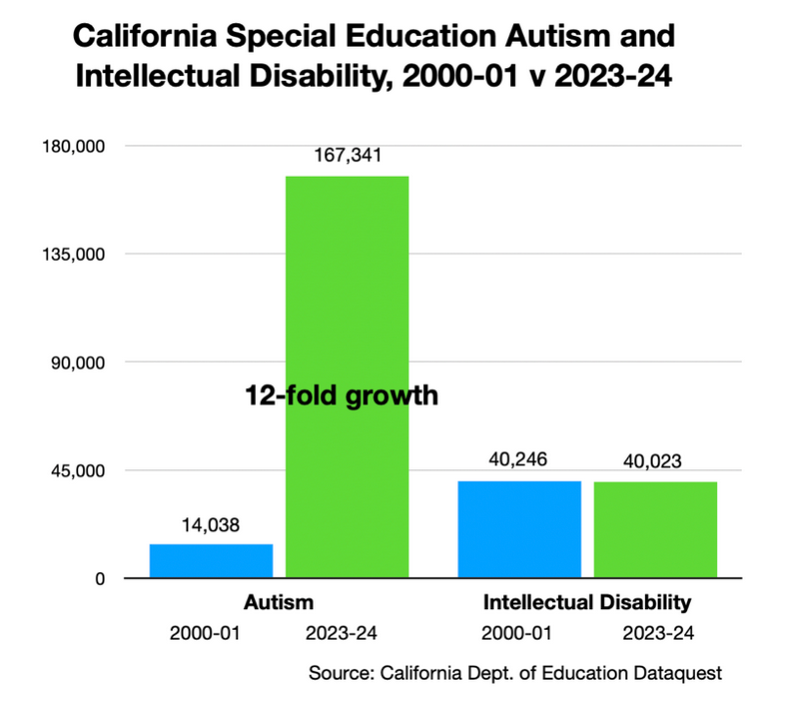 It has been said that families with many intellectuals have a higher risk of breeding kids on the autism spectrum.[6] [7] And yes, they might have access to and an interest in all health and development checkups that are offered, which results in closer monitoring and more diagnoses than in past times or in people with less resources and interest. Conversely, in recent years the prevalence shows to be higher in families with lower incomes, and with parents who only have a high-school degree. [8]
Greta Thunberg, the well-known climate activist, has a diagnosis of being on the spectrum and has called it her “superpower”. Billionaire Elon Musk is said to be on the spectrum. But these cases are not pathological, although they may be called “neurodiverse”. However, it seems obvious that the number of children who suffer and need help because of their disabling symptoms related to autism has multiplied over the last decades. [9]
The Role of our Blueprint
The heritability of autism is high, but there are epigenetic factors at play that affect gene expression without altering the DNA sequence, rather than “autism genes”. As an example for this, DNA methylation (a biochemical modification) plays a crucial role in regulating biological processes, including development, gene silencing, and responses to environmental factors.[10] [11] A pioneer study detected characteristic changes in methylation in the father’s sperm during the mothers’ pregnancy with babies, who later became diagnosed with autism.[12]
Autism is not confined to a set of neurological features. It comes with typical changes in biological functioning too, such as changes in the gut microbiome corresponding to a “leaky gut” [13], a condition that is physiological during early development of the microbiome and immune system [14], but when retained leading to chronic inflammation which in its turn has further impact on the brain, a self-reinforcing loop started by epigenetic programming.[15]
The circumstances, the outer and inner environment, determine whether and how a predisposition for autistic traits through neurodevelopment, immune and mitochondrial functioning plays out.
Brain development
Compared to animals, the human brain takes an incredibly long time, more than 20 years, to become fully functional. In the womb, early childhood, and in the teenage years [16] our brains are especially vulnerable to be imprinted and develop neurodiverse features such as those on the autistic spectrum. Hormones already play a role during pregnancy. When the uterus is an environment bathed in testosterone, the risk of the baby being born with autistic traits, increases.[17] This goes along well with the “extreme male brain” theory.
Social interaction belongs to the first priorities in development of the human brain after birth. Humans’ and other mammals’ survival depends on the bonding between mother and child, and recognizing mom’s face and voice, getting her attention to be held and breastfed, and responding with a smile upon her smile belong to the first learnings in a baby’s life. These are laid down in the right hemisphere. If this process is disturbed, the child lacks the neurological foundation for empathy and social interaction.[18]
Movement has a pivotal role in brain development. Before the cerebral cortex has a say, reflexes from the brain stem help the baby to turn around in the womb and to work its way out of it. They enable the baby latch onto mom’s breast, to grasp, to roll over, to react upon a fright. While learning to move, crawl and use its muscles voluntarily, the child integrates and replaces the reflexes and its brain grows immensely.[19] It develops a sensory map of its body in the cerebral cortex, predominantly in the right hemisphere where also the networks of social connection are located. These together are key for our capability of empathy, of sensing what another person feels, because we can feel the same![20] [21]
Only once these milestones are reached, the left cortex and its functions develop on a solid foundation. This typically occurs around age three, the so-called defiant phase, when the child begins to explore its own will and insists on doing things independently, all within the safety of the mother’s attentive presence.
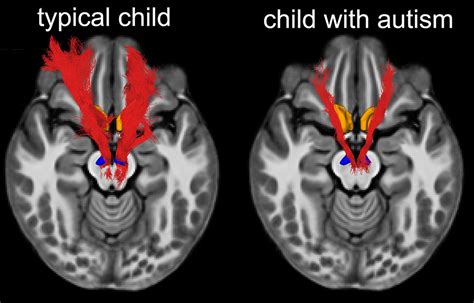
“Immune activation during neurodevelopment has been increasingly linked to various cases of neurological dysfunction.”
The good news are, that delays and imbalances can be treated and trained, also retroactively and by surprisingly simple but effective means. Pathological shortcomings of autism can be relieved by non-invasive, multi-level exercises.[23] A pioneer therapist and researcher is Dr Robert Melillo [24], who started his career as a father of neurodivergent children, and for whom, like for us META-Health Practitioners, honouring the personality and the imminent talents of the neurodivergent individual is a core value.
Response to a Trigger
The signs of autism often appear spontaneously during a certain age of social and brain development. Parents have reported that in close timely relationship to an event, their child lost their eye contact, their speech and motor skills, it “regressed” as if after a trauma or brain injury. We need to mind these potential triggers and try to prevent or reduce them.
I explored this in a META-Health article [25] some years ago. Since then, I came across more fascinating discoveries and concepts to explain autism and to help overcome the functional deficiencies.
The Cell Danger Response as described by Prof R.K. Naviaux [26] seems to play a key role, as purinergic signaling between body cells – also neurons – leads them to behave defensively when being exposed to threats such as environmental toxins, infections, injuries, stress and trauma. This response is the first phase in the cycle of healing [27], and it involves mitochondrial and metabolic changes, immune functions and inflammation, which prevent further entering and spreading of the threatening agent. This comes at the cost of a loss of energy/ATP, and it necessarily leads to a lessening and halt in cooperation and development of functional tissues. I explored the CDR in this META-Health webinar [28]
Prof Naviaux and colleagues also conducted a pioneer study on autistic boys, finding that stopping the CDR signaling via one low dose of suramin lead to remarkable changes in the children regarding language, social interaction, and reduction of repetitive behaviour, that further improved for 3 weeks and then waned.[29] This research gives insight into the mechanism that is active in ASD [30], and triggers that have the potential to reverse and heal it.
Vaccines are one way to provide protection to a vulnerable subset of the population by stimulating their immune response. They would be rather meaningless for the subset with a strong immune system, and dangerous for a subset with an already overly active one.
In babies and children, whose systems are still developing, we need to assess their individual preconditions and evaluate the relevance and risks of each intervention, including vaccinations, within the full context of their health. And as correctly stated on the CDC’s website, this is yet to be done.
This article was first published in the META-Health 4 U Blog
Sources and references:
[1] https://www.cdc.gov/vaccine-safety/about/autism.html
[2] https://zenodo.org/records/17451259
[3] https://www.drrobertmelillo.com/research/2009-Melillo-Leisman-Autism-RevNeuro-rev220509.pdf
[4] https://www.frontiersin.org/journals/psychology/articles/10.3389/fpsyg.2025.1558081/full
[5] https://pmc.ncbi.nlm.nih.gov/articles/PMC8328919/
[6] https://www.sciencedirect.com/science/article/pii/S0890856719302710 [7] https://www.scientificamerican.com/article/children-of-smart-fathers-have-higher-risk-of-autism/
[8] https://www.ncsautism.org/blog//relentless-surge-of-autism-in-california
[9] https://www.ncsautism.org/blog//autism-explosion-2024
[10] https://jamanetwork.com/journals/jama/fullarticle/1866100
[11] https://www.frontiersin.org/journals/neurology/articles/10.3389/fneur.2015.00107/full
[12] https://www.hopkinsmedicine.org/news/newsroom/news-releases/2023/04/changes-in-fathers-sperm-linked-to-autistic-traits-in-their-children-small-preliminary-study-suggests
[13] https://pmc.ncbi.nlm.nih.gov/articles/PMC10264341/
[14] https://translational-medicine.biomedcentral.com/articles/10.1186/s12967-021-02839-w
[15] https://neurolaunch.com/leaky-gut-autism/
[16] https://www.drrobertmelillo.com/wp-content/uploads/2025/10/brainsci-15-01057-v2.pdf
[17] https://pmc.ncbi.nlm.nih.gov/articles/PMC8280339/
[18] https://www.zerotothree.org/resource/distillation/understanding-brain-development-in-babies-and-toddlers/
[19] https://www.drrobertmelillo.com/wp-content/uploads/2025/04/Evaluating-Primitive-Reflexes-in-Early-Childhood-as-a-Potential-Biomarker-for-Developmental-Disabilities.pdf
[20] https://psycnet.apa.org/record/2016-19317-004
[21] https://www.youtube.com/watch?v=XFDTS8qybfo
[22] https://pmc.ncbi.nlm.nih.gov/articles/PMC9213174/
[23] https://hopebraincenter.com/functional-neurology-autism-spectrum-disorder/
[24] https://usinsider.com/dr-robert-melillo-at-the-forefront-of-brain-health-and-neurodevelopmental-disorders/
[25] https://metahealth4u.com/en/autism-and-the-gut-brain-immune-axis/
[26] Naviaux, R.K. Metabolic features of the cell danger response. Mitochondrion 16, 7-17 (2014) https://pubmed.ncbi.nlm.nih.gov/23981537/
[27] https://naviauxlab.ucsd.edu/science-item/healing-and-recovery/
[28] https://metahealth4u.com/en/closing-a-knowledge-gap-with-primeval-biology/
[29] https://naviauxlab.ucsd.edu/wp-content/uploads/2017/05/Naviaux_et_al-2017-Annals_of_Clinical_and_Translational_Neurology.pdf
[30] https://www.sciencedirect.com/science/article/pii/S1567724925000935
Picture sources:
https://www.cdc.gov/vaccine-safety/about/autism.html
https://www.ncsautism.org/blog//autism-explosion-2024
https://med.stanford.edu/news/all-news/2018/07/key-social-reward-circuit-in-the-brain-impaired-in-kids-with-autism.html
 META-Healthy Life articles are created by professionals and friends of META-Health International CIC, supporting individual and global health by deepening and sharing our understanding of how resilience and well-being are achieved.